ServicesSiding
Siding Repair and Replacement in Taylor Mill
We repair and replace siding with attention to what sits behind it: the wrap, the flashing and the sheathing that keep water out of your walls. You get a clear answer on what failed and why, and options with honest trade-offs. Then you decide.
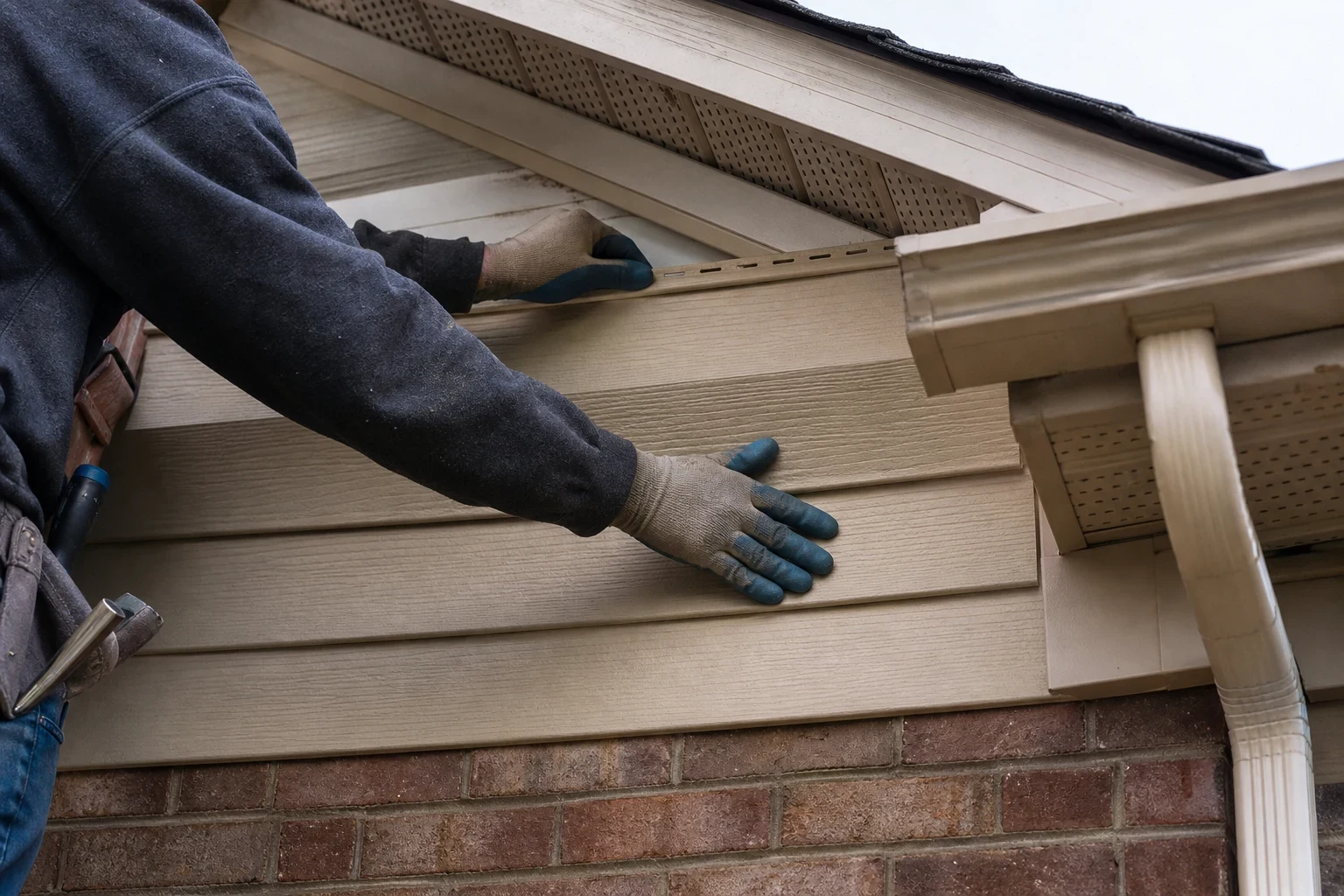
When Siding Work Is the Right Call
Siding is a rain screen. Its job is to shed most of the water and protect the house wrap behind it, which handles the rest. When panels crack, loosen or buckle, that second layer starts doing all the work, and it was never meant to.
Many problems need only a repair: a few panels replaced, a seam reset, a section of trim refastened. Others point to a wall that has been taking on water for years. We tell you which one you have, what it costs to fix properly and what happens if you wait.
Siding meets the roof at every wall, so we look at both. Missing kickout flashing where a roof edge runs into a sidewall is one of the most common causes of rotted siding we see, and it is a small part to fix.
What Our Siding Work Includes
Panel and section repair
We replace damaged vinyl, fiber cement or engineered wood panels, matching the profile, exposure and shade as closely as the product allows. If the original line has been discontinued, we lay out the alternatives, such as borrowing matching panels from a wall few people see.
Full siding replacement
We remove the old cladding, inspect the sheathing, replace soft or rotted boards and install new house wrap before the new siding goes on.
Flashing and water management
Windows, doors and roof-to-wall joints get proper flashing and taped seams. This is the part you never see and the part that decides whether the wall stays dry.
Trim, soffit and fascia
Corners, J-channel, soffit panels and fascia wrap are finished so the edges look clean and close the gaps where water and insects get in.
Correct fastening
Vinyl expands and contracts with temperature, so we nail it loosely enough to move. Panels nailed too tight are the main reason vinyl buckles on a sunny wall.
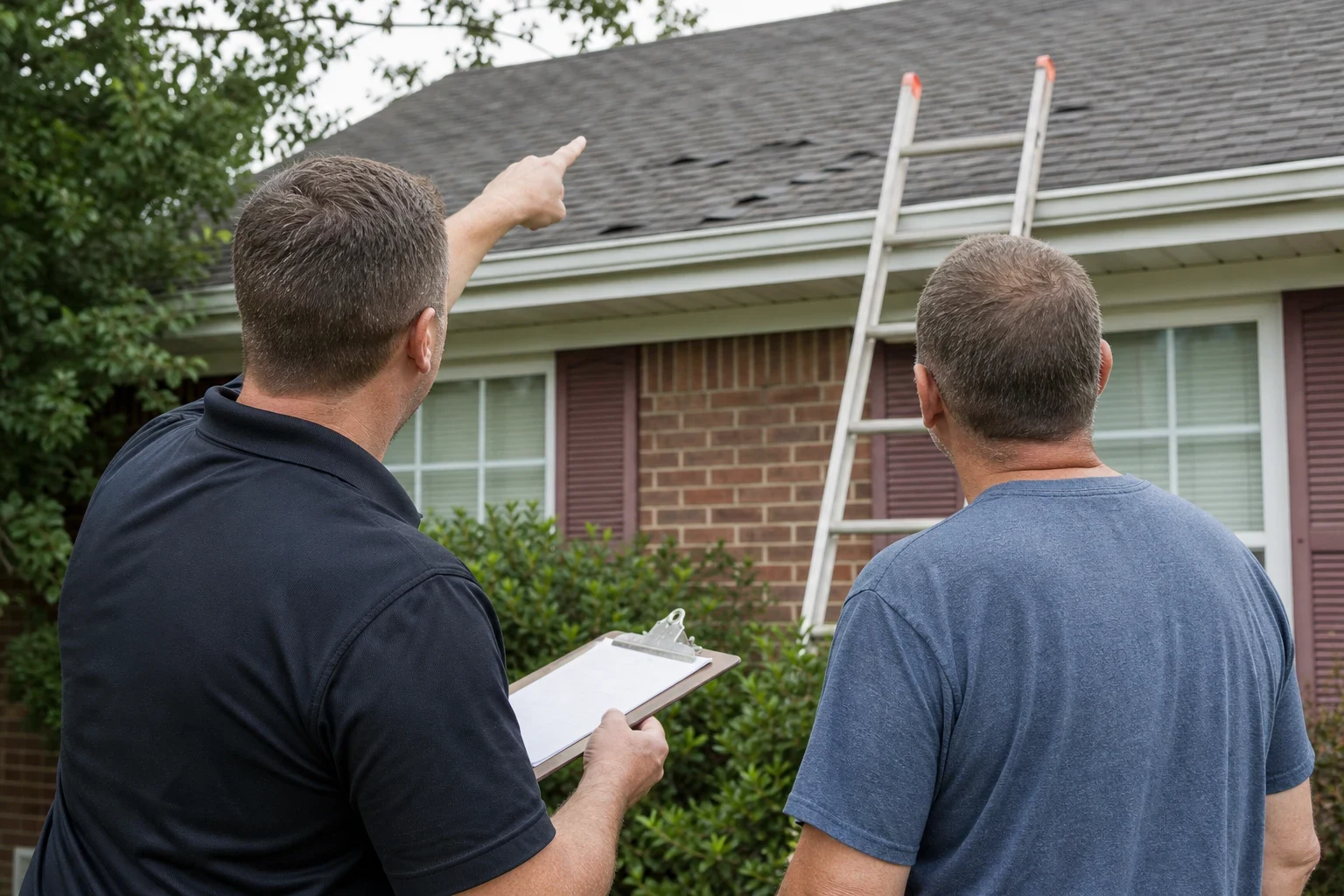
Signs Your Siding Needs Attention
- Warped or wavy panels
- Rippling usually means panels were nailed too tight or heat from a grill or reflected sunlight distorted them. Sometimes they can be refastened; often they need replacing.
- Cracks and holes
- Hail, a stray ball or hard cold can crack vinyl. Even a small split lets water reach the wrap behind it.
- Soft spots or swelling
- Press on the siding near windows and lower corners. Give or swelling suggests moisture in the sheathing, and that is worth checking soon.
- Stains below windows or roof lines
- Dark streaks running down from a window corner or roof edge often trace back to missing or failed flashing.
- Loose or missing pieces after wind
- Panels that unlock in a strong gust are easy to reset when caught early, before rain gets behind the open seam.
- Peeling paint inside on exterior walls
- Blistered paint or damp drywall on an outside wall can mean water is getting through the siding.
How a Siding Job Runs
- 1
Free estimate on site
We walk the walls, check suspect areas by hand and take photos. You hear what we found and what caused it, in plain terms.
- 2
Written scope and options
You get a written estimate listing the materials, the square footage and any sheathing allowance. If repair makes sense, we say so.
- 3
Prep and protection
We cover plantings and set drop cloths along the foundation. We also check what your city requires and pull a permit when one is needed.
- 4
Removal, repair and install
Old siding comes off one wall at a time so the house is never left open overnight. Any soft sheathing is shown to you before it is replaced.
- 5
Cleanup and walk-through
We pick up cut-offs, sweep for nails with a magnet and walk the finished walls with you.
What Moves the Cost of Siding
Siding is priced mostly by wall area and material, but the wall underneath often decides the final number. We price what we can see, name an allowance for what we cannot, and show you photos before any extra work is done.
- Wall area and stories
- Contractors measure in squares of 100 square feet. Two-story walls and steep lots need more staging, which adds labor.
- Material choice
- Vinyl costs least to install. Fiber cement and engineered wood cost more but hold paint well and resist impact better.
- Sheathing condition
- Rotted boards behind the siding must be replaced before new cladding goes on. You cannot know the extent until the old siding is off.
- Trim and detail work
- Many windows, gables and corners mean more cuts, more flashing and more time.
- Removing old layers
- Some homes have siding over older siding. Taking both down adds labor and disposal, but it lets us see the wall.
Siding Questions, Answered
- Can you match my existing siding for a repair?
- Often, yes. We bring samples and compare profile and color on your wall. Older vinyl fades, so a new panel may look slightly brighter at first. If the line has been discontinued, we can move panels from a hidden wall to the front and use new siding in back.
- Should I choose vinyl or fiber cement?
- Vinyl is lighter, lower in cost and needs no painting. Fiber cement is heavier, stands up better to hail and impact, and takes paint for a crisper finish. Freeze-thaw winters are hard on both if they are installed poorly, so the installation matters as much as the product.
- Can siding and roof work be done together?
- Yes, and it often saves effort. The flashing where a roof meets a wall belongs to both jobs, so doing them together means it is done once and done right. We handle roof replacement and gutters as well.
- Will insurance cover hail or wind damage to my siding?
- It depends on your policy and on the damage itself. We photograph each damaged area and walk you through it, which gives you a dated record to hand to your insurance company. The coverage decision belongs to your adjuster, not to us.
- How long does a siding replacement take?
- A typical house takes several working days, depending on size, weather and what we find behind the old siding. We give you a realistic schedule in the estimate and tell you right away if sheathing repairs change it.
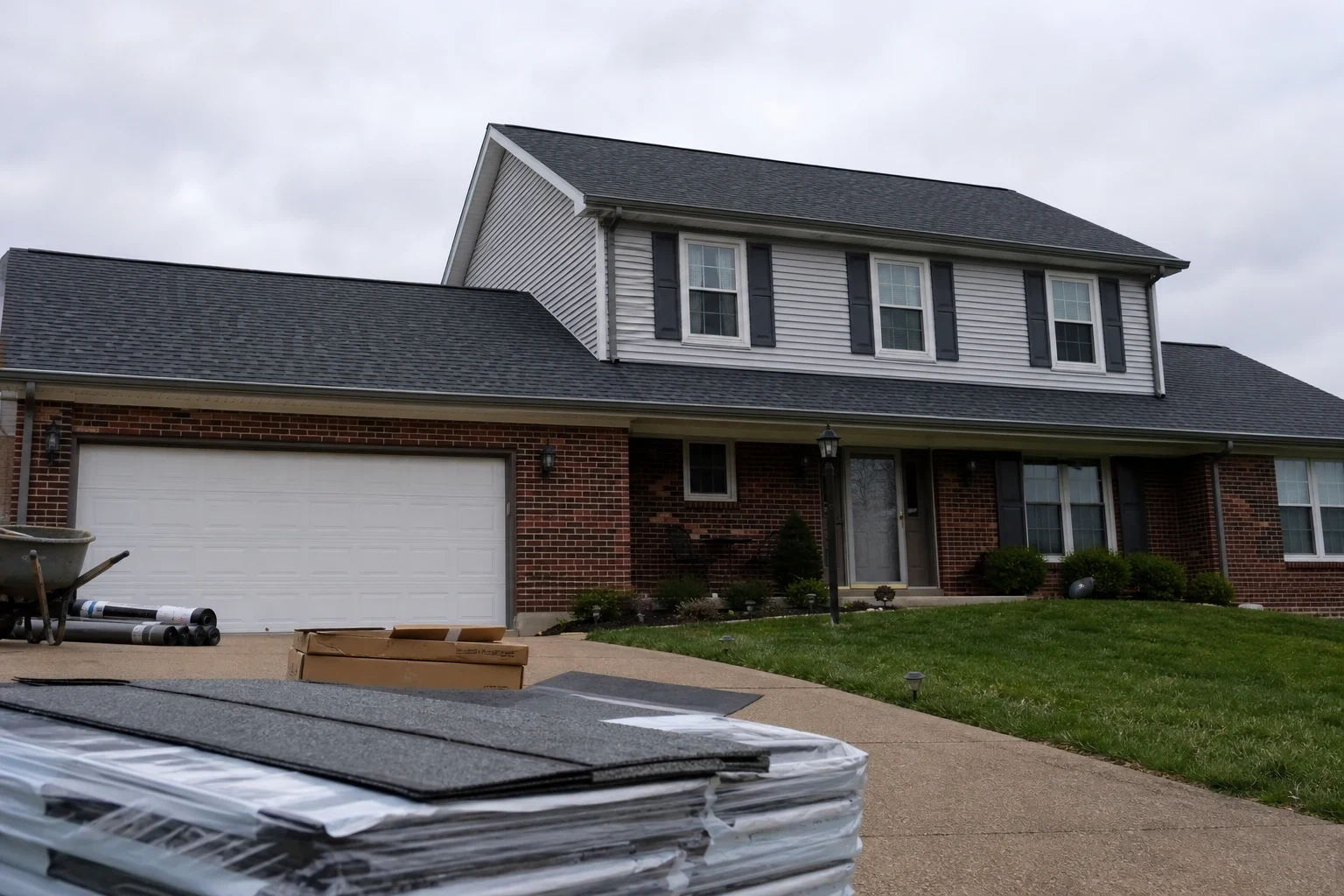
Find Out What Your Siding Really Needs
We will look at your walls, explain the cause and lay out repair and replacement options at no cost. If you are new to us, you can put our Limited Time — $50 Off Your First Service Call toward the work.