ServicesGutters
Gutters in Taylor Mill, Sized and Pitched to Drain
We repair and replace aluminum gutters and downspouts, sized for the volume of rain each roof section delivers. Before anything is scheduled, you hear what is failing, what the fix takes and which parts of the job move the price.
What Gutter Work Covers and When It Makes Sense
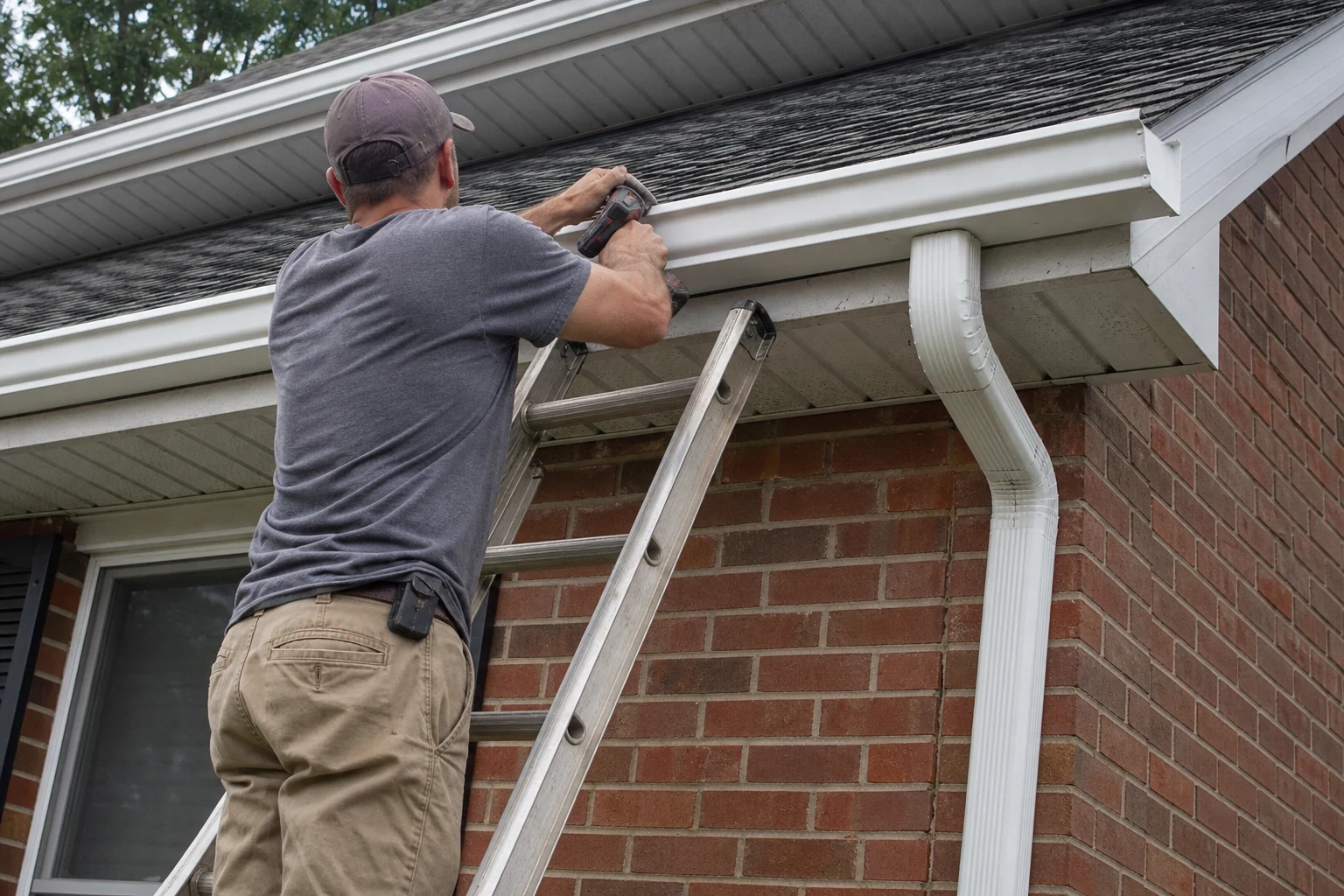
A gutter system has one job: collect the water coming off your roof and set it down far enough from the foundation that it cannot find its way back. When gutters sag, overflow or pull away from the fascia, that water lands against siding, soaks the soil beside the basement wall and, in winter, refreezes along the roof edge.
Some problems are a repair. A loose hanger, a leaking corner or a clogged downspout can be fixed in an afternoon. Replacement makes sense when the gutters are undersized, pitched wrong along their whole length, or held together with years of patched seams. We tell you which one you have and why.
Northern Kentucky winters bring repeated freeze and thaw, so we pay close attention to pitch and hanger spacing. Gutters that drain fully leave less standing water to freeze, expand and pry at joints.
Gutter Work, Part by Part
- Seamless runs cut to each roof edge
- Our crew feeds aluminum coil through a forming machine in your driveway and produces one piece for every roof edge. With no joints along the straight sections, our sealing effort goes into the corners and end caps, the only places two pieces meet.
- Sizing to your roof
- Most homes do well with 5-inch K-style gutters, but steep or large roof sections can overwhelm them. We look at roof area and pitch, and recommend 6-inch gutters with 3x4 downspouts where the water volume calls for it.
- Hidden hangers, set into sound wood
- Hangers are screwed into the fascia at close, even spacing so the gutter holds its line under wet leaves and snow. If the fascia board behind it is soft, we replace that section first rather than hang new gutters on rot.
- Downspouts and discharge
- Downspouts go where they can empty away from walkways and the foundation. At the bottom we fit an extension or a splash block, so runoff spreads out on the lawn instead of collecting against the wall.
- Drip edge and roof-edge check
- Because we are roofers, we look at the shingle edge and drip edge while we are up there. Water that runs behind the gutter is often a roof-edge issue, and we will show you if that is the case.
- Gutter guards, when they help
- Under heavy tree cover, guards can cut down on clogs. Where there are few trees, they may not be worth the cost, and we will say so.
When Your Gutters Are Telling You Something
Overflow during a steady rain
If rain sheets past the outer lip instead of reaching the downspout, the cause is usually a clog, a gutter too small for the roof above it, or a run sloped the wrong way.
Sagging runs or a gap at the fascia
When a run bows low in the middle or tips outward from the roofline, the hangers no longer have a firm hold. The board they screw into has often gone soft after years of moisture.
Stains, peeling paint or wet siding
Streaks down the siding or paint peeling under the roofline point to water escaping at joints or running behind the gutter.
Pooling near the foundation
Puddles or eroded mulch at the base of a downspout mean the water is landing too close. Over time that shows up as damp basement walls.
Icicles and ice along the edge
Heavy icicles hanging from the gutters in winter suggest water is sitting in them instead of draining, and can signal attic heat loss worth checking during a roof inspection.
How a Gutter Job Runs
- 1
A free estimate at your home
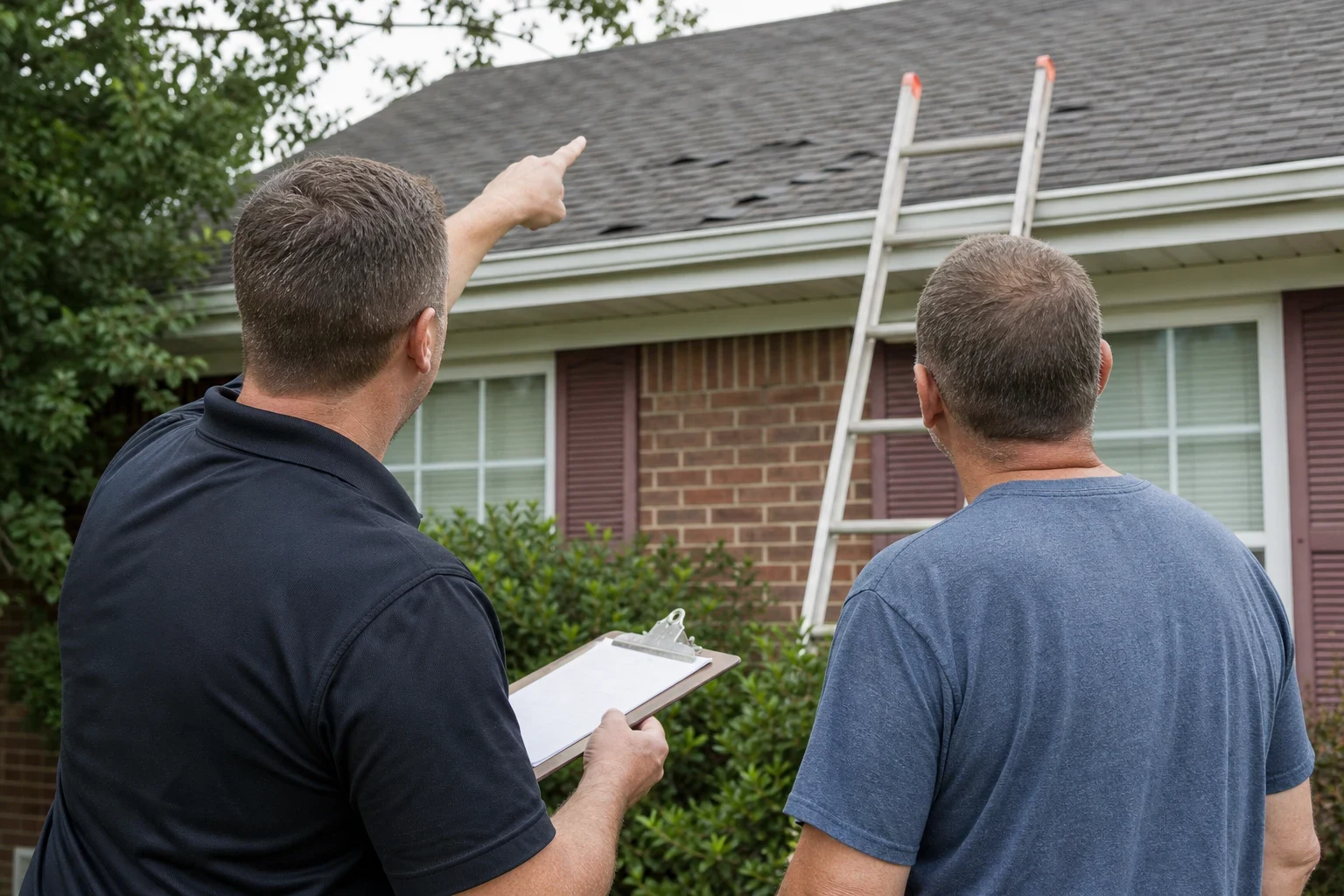
We walk the roofline, check pitch, fascia and downspout placement, and measure each run. You get a clear answer on repair or replacement and what each option includes.
- 2
Prep and removal
On the day, we protect plantings below the work area and take down the old gutters. Any soft fascia is cut out and replaced before anything new goes up.
- 3
Forming and hanging
Gutters are formed on site to length, then hung with a slight, steady fall toward each downspout, roughly a quarter inch every ten feet. Corners and end caps are sealed.
- 4
Water test and cleanup
Before we leave, we run a garden hose at the far end of every run and watch the water travel all the way to the downspout. If any stretch holds a puddle, we reset its hangers. Then the old gutters, screws and offcuts are loaded up and hauled away.
What Moves the Cost of Gutters
Two things set most of the price: the total length of gutter around your home and the condition of the wood it hangs on. Your estimate lists each part separately, so nothing is bundled out of view. First-time customers can also apply our Limited Time — $50 Off Your First Service Call.
- Linear footage and stories
- Longer rooflines need more material, and second-story runs take more ladder work and time than a single-story ranch.
- Gutter and downspout size
- Six-inch gutters and 3x4 downspouts use more material than the standard 5-inch setup, though on the right roof they prevent overflow for years.
- Fascia condition
- Rotted fascia has to be replaced before new gutters go on. We cannot always see how far rot runs until the old gutter is down, so we explain that possibility up front.
- Corners, guards and extras
- Each inside or outside corner, added downspout, extension or run of gutter guard adds to the total. We list them so you can choose what is worth it.
Gutter Questions, Answered Plainly
Something not covered here? (859) 214-7947
Can my gutters be repaired, or do they need replacing?
If the trouble is a few loose hangers, a leaking corner or a clogged downspout, repair is usually the sensible choice. If the runs are undersized, pitched wrong end to end, or patched at many joints, replacement costs less over time. We show you what we found and let you decide.
Why gutters formed on site instead of sectional gutters?
Sectional gutters join every ten feet or so, and each joint is a place to leak. Gutters formed on site run the full length of the roof edge in one piece, so leaks are limited to corners and end caps. Aluminum does not rust, and it comes in colors that suit your trim.
Do I need gutter guards?
It depends on what is above your roof. Homes under mature trees often see real benefit from guards, while homes with little overhead cover usually do fine with seasonal cleaning. We will give you an honest recommendation either way.
Will you look at my roof while you are there?
Yes. Water problems at the gutter often start at the shingle edge or drip edge. If we see something worth fixing, we explain it and you can decide whether to add roof repair or schedule a separate roof inspection.
Can you match new gutters to my siding and trim?
Aluminum gutter stock comes in a wide range of colors, and we bring samples to the estimate. If your siding also needs attention, we can talk through both at once.
How long does a gutter replacement take?
Most single-family homes are finished in one day, including removal, hanging and cleanup. Fascia replacement or a large two-story home can add time, and we tell you that at the estimate.
Find Out What Your Gutters Need
We will check the runs, downspouts and fascia, then tell you plainly whether a repair will do or new gutters are the better buy. Homeowners in Taylor Mill, Independence, Edgewood and nearby can set up a visit by phone.