ServicesRoof Inspections
Roof Inspections in Taylor Mill That Show You the Evidence
We go over the roof surface, look into the attic when there is access, and take pictures of anything worth your attention. You hear what is wrong, what likely caused it, and whether it needs repair, replacement or watching. The visit is free, with no work scheduled unless you want it.
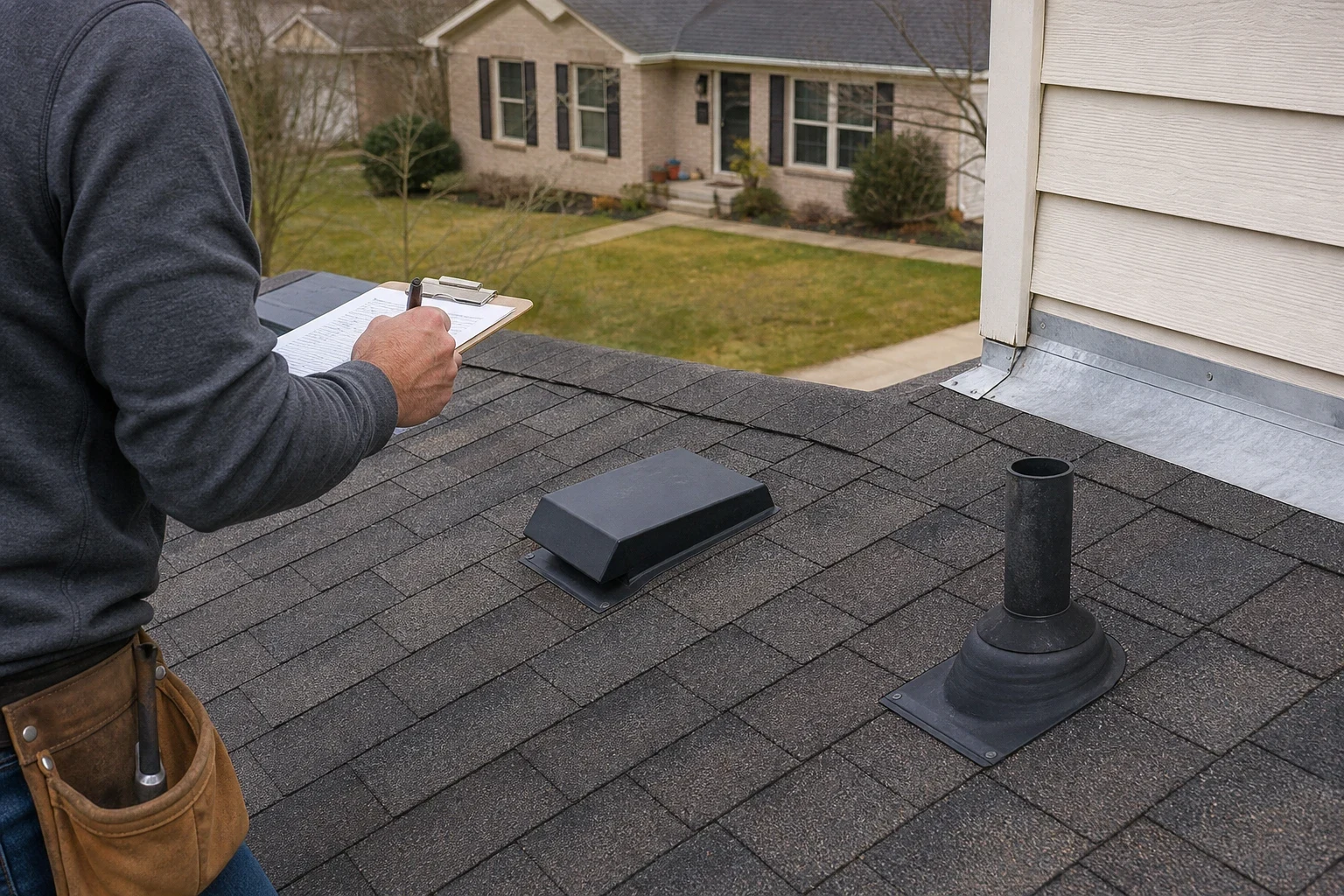
What a roof inspection tells you
An inspection covers each layer that stands between the weather and your home: the shingles, metal flashing, vents and valleys, the gutters along the eaves and, from the attic, the underside of the decking. It makes sense before a sale or purchase, after a rough winter, when a ceiling stain appears, or once a roof passes fifteen years and you want an honest read on its condition.
Winters here cross the freezing line again and again. Each swing loosens sealant, backs nails out and opens flashing seams a little more, which is why most of what we find began as something minor. Found early, it is usually a modest roof repair rather than a bigger bill a few seasons on.
When the roof is in good shape, you will hear exactly that. When it is not, we name the cause before we talk about options.
What we check on every inspection
Shingles and surface wear
We note missing, lifted or creased shingles, cracks, bare patches where granules have worn off, and any give in the deck underfoot. A buildup of granules in the gutters is one of the plainer signs that an asphalt roof is getting older.
Flashing and roof penetrations
Chimneys, skylights, plumbing vents and the joints where roof meets wall account for a large share of leaks. We inspect the metalwork and its sealant, and we pay close attention to rubber vent boots, which tend to split years before the shingles around them give out.
Valleys and drainage
A valley gathers water from two slopes at once, so it wears faster. We look for thinning and trapped debris, then follow the water into the gutters and downspouts to see whether it clears the fascia.
Attic and ventilation
Inside, we check for pinholes of daylight, dark or damp decking, rusted nail points and frost staining. Weak airflow cooks shingles in July and helps ice dams form in January.
Photos and a written summary
Every issue is photographed and tagged by where it sits on the roof. You also get a brief written summary of condition, probable cause and next steps, useful for your files, a buyer or your insurance agent.
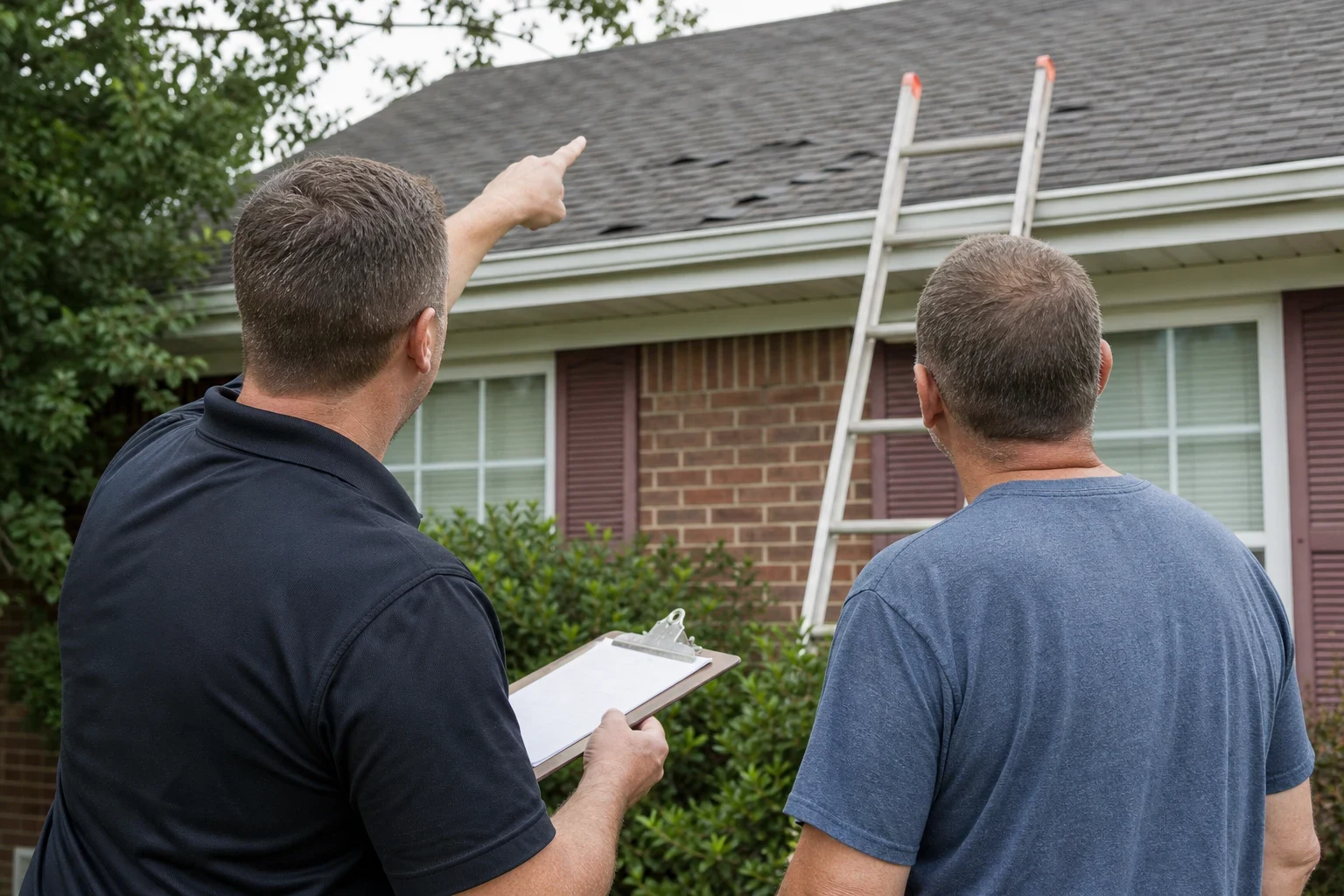
Signs your roof is due for a look
- A stain on a ceiling or upper wall
- A brown ring or blistered paint usually means water has been finding its way in for a while. The opening on the roof is often a few feet upslope from where the stain shows.
- Grit at the bottom of the downspouts
- Sand-like material washing out of a downspout means shingles are losing their protective coating. A little is normal on a new roof, but on an older one it is a warning.
- After hail or high wind
- Bruised shingles and lifted tabs rarely show from the yard. A close look tells you whether the damage is real before you contact your insurer. Our storm damage repair page covers what happens next.
- Ice dams or heavy icicles
- Thick ice along the eaves means attic heat is escaping and melting snow higher up. That water can refreeze at the edge and work back under the shingles.
- A sale or refinance on the calendar
- Buyers, lenders and appraisers all ask about the roof. A documented condition report answers that early, before it can hold up a closing.
- A roof in its middle years
- Asphalt roofs usually begin to show real wear somewhere between fifteen and twenty years. An inspection then tells you how much service is left so you can budget for it.
How the inspection goes
- 1
Setting the visit by phone
Let us know what you have spotted and roughly how old the roof is. We pick a time that suits your schedule.
- 2
Up on the roof and around the house
When conditions are safe, we walk the slopes and photograph anything that matters. We also look at the gutters, the fascia and where the siding meets the roofline.
- 3
Into the attic, with your okay
The exterior work does not require you to be home. If you are, a few minutes in the attic is worth it, since the underside of the decking often shows problems the shingles hide.
- 4
Going over the findings
We sit down with the photos, explain what caused each issue and set out your choices. When a repair is the sensible answer, that is what we recommend. When the roof is past repairing, we show you why and follow up with a free estimate for the work.
The inspection is free. Here is what shapes the cost of any work.
You pay nothing for the inspection. Should you decide on work afterward, every part of the job is priced separately and shown to you before anything is scheduled. If this is your first time hiring us, the offer running now applies: Limited Time — $50 Off Your First Service Call.
- Roof size and pitch
- A bigger roof needs more material and more hours. Steeper slopes call for extra safety gear and slower, more careful footing.
- Condition of the decking
- If the plywood under the shingles has softened or rotted, it must come out before new material goes down. That often stays hidden until tear-off, so we explain ahead of time how we would price it if we find it.
- Flashing and detail work
- Each chimney, skylight, dormer and valley adds hand work. A simple gable roof is less costly to repair than one with many meeting planes.
- Material and matching
- Some older shingle lines have been discontinued, so a repair may use the nearest available match. Metal and specialty products are priced differently from standard asphalt.
Roof inspection questions
- How long does a roof inspection take?
- Plan on roughly an hour for a typical single-family roof. A steep pitch, more than one layer of shingles or a cramped attic can add time. Either way, we review the results with you before leaving.
- Will the inspection turn into a sales pitch?
- It should not. Plenty of roofs we look at need a minor fix or nothing yet, and we will tell you so. Any recommendation to replace comes with the photos and the reasoning behind it.
- Is your report worth having if I'm thinking about filing with my insurer?
- Yes, as a starting point. The pictures we take are labeled by location on the roof, so you can see for yourself whether the damage looks large enough to be worth a claim, and you can pass them along to the adjuster. We are happy to explain the usual order of a claim. Coverage is decided by your insurance company and its adjuster, not by us.
- How often should my roof be inspected?
- Once every year or two is a sensible rhythm, plus a check after any serious hail or wind. Fall is a good season for it, because small issues get handled before the freeze-thaw months.
- Do you look at gutters and siding too?
- We do, wherever they affect the roof. Clogged or pulling gutters and gaps along the roofline both let water in, and they go into your summary. Our gutters and siding pages explain that work further.
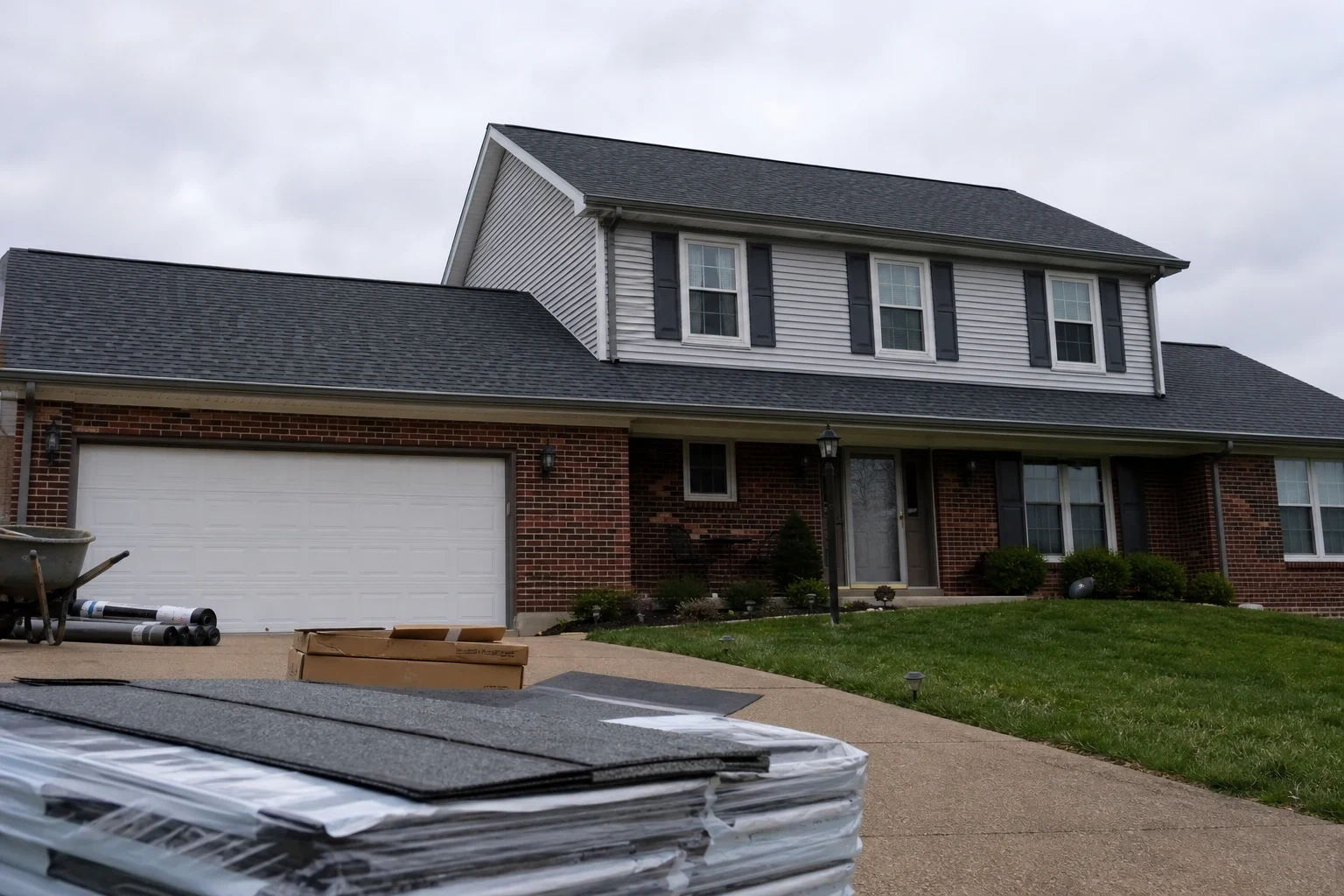
Know what your roof needs before it tells you
A single visit gets you photos, a named cause and a plain recommendation. We work in Taylor Mill and nearby towns such as Independence, Covington and Fort Mitchell.